
How Men Dress Up Coping in Sunday Best and Call It Transformation
A series by Ross Charles
There is a resurgence happening right now.
A wave of teachings framed as biblical, ancient, or timeless masculinity. A renewed call for men to become stronger, more disciplined, more decisive, more watchful, more obedient. A promise that clarity, certainty, roles, and authority will finally fix what feels broken inside.
This message is spreading rapidly through churches, conferences, bestselling books, podcasts, and men’s movements.
And it is not healing men.
It is letting them cope in religious clothes and calling that maturity.
Why I’m Writing This Series
I study what keeps people from healing. Not what helps them cope. Not what helps them perform better. Not what helps them stay productive inside systems that demand constant override.
I study what prevents actual freedom.
Again and again, I see the same pattern: frameworks that quiet distress by narrowing the nervous system rather than expanding it.
Modern biblical manhood teachings are one of the most effective current examples.
Many of these frameworks once helped me keep my head above water too.
They perform a very narrow but reliable function: they make a man feel like he is better than he was.
Better than the lazy, anxious, lustful version of himself from last week. Better than the men who aren’t running the check-ins or joining the groups.
That feeling is real. It is a quick hit of moral elevation and temporary order. It replaces chaos with a checklist and shame with the sense that he is finally doing it right.
They give hurting men something to emulate, something to submit to, something to perform.
They let men dress up their coping in Sunday best. It looks sharp from the outside, feels righteous on the platform, but underneath nothing fundamental has changed.
For men carrying severe trauma, this can feel like the first real breath they have taken in years. The unpredictability quiets. There is now a script, a group, a moral reason to keep going. Predictability shows up where there was only flood before.
They gain stability and predictability that feels like genuine relief, enough to lead and protect. But the deeper wounds stay organized rather than resolved, and the freedom to live without the script remains out of reach.
What This Teaching Actually Does
These frameworks promise transformation.
What they reliably deliver is coping with religious polish.
They train men to override bodily signals instead of listening to them. Suppress internal conflict instead of metabolizing it. Submit to external authority instead of building internal safety. Stay functional under pressure instead of expanding under presence. Endure life rather than fully inhabit it.
They mistake discipline for healing. Certainty for strength. Compliance for maturity.
This is not accidental. This is exactly how coping gets elevated when wrapped in scripture.
Coping Is Not Transformation
Coping is intelligent. It is adaptive. It is often necessary.
But coping is not the same as thriving. And it is not healing.
When the nervous system faces ongoing threat, it narrows. It prioritizes rules over exploration. Certainty over truth. Control over presence.
Biblical manhood teachings excel at reinforcing this narrowed state.
They help men endure pain without resolving it. Behave well without becoming whole. Cope religiously instead of living freely.
This series exists to name that clearly, without outrage, without dismissal, and without leaving men stuck there.
What This Series Examines
This is not a theological debate. It is not a personal attack.
It is a systems-level, nervous-system-based analysis of why these teachings feel like transformation when they are religious coping, and why they block deeper freedom.
Across nine parts, we will explore:
- Why Biblical Manhood Works (and Why That’s the Problem)
- Why Masculinity Tightens Under Threat
- Manhood Is Not Timeless
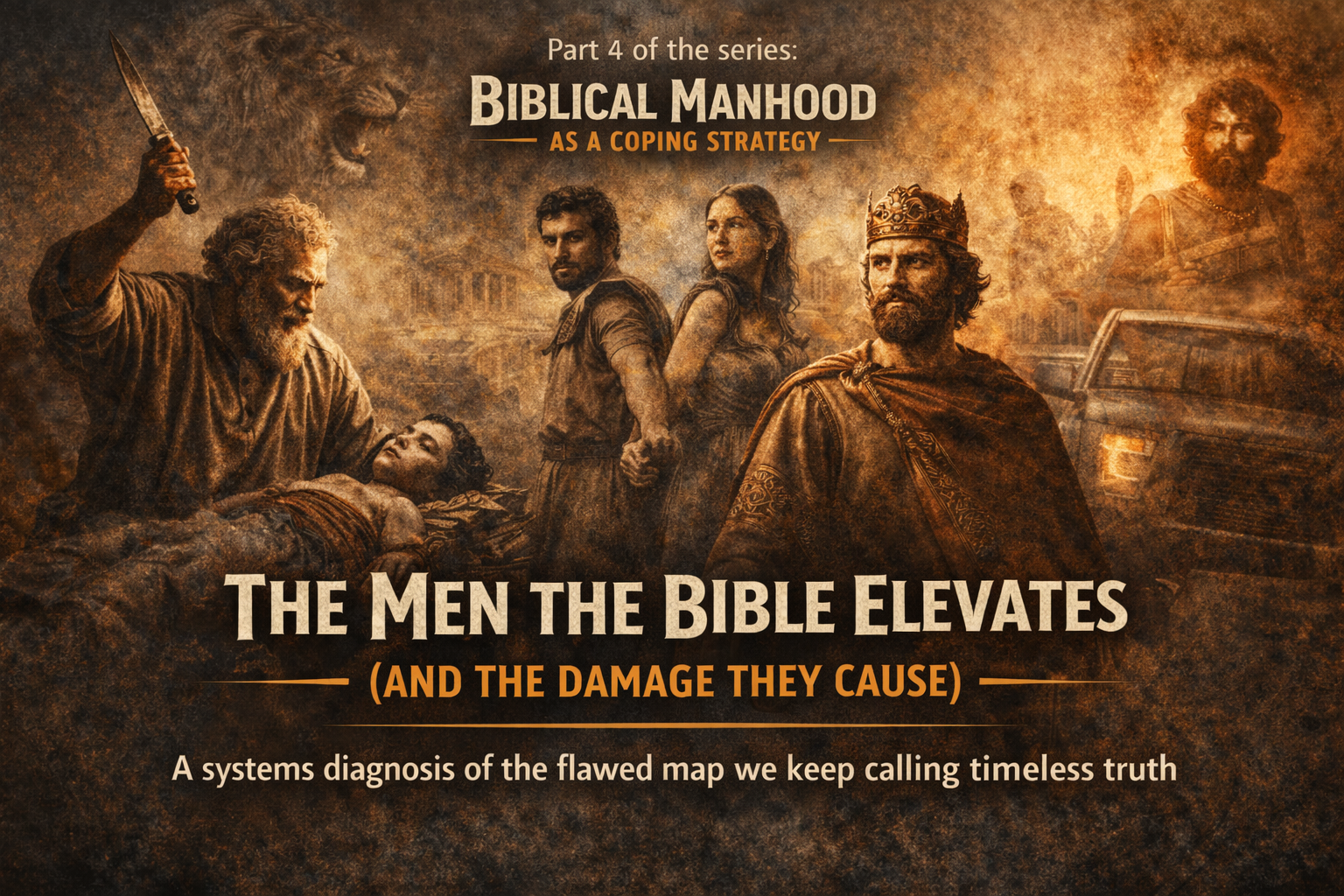
- The Men The Bible Elevates and The Damage They Cause
- When Survival Gets Called Sin
- The Relief Trap
- Accountability Is Not Attachment
- Lust, Dopamine, and the Lie of Avoidance
- Rest Is Not Weakness
- Freedom Is Not Obedience
The focus is outcome, not intent. Teachings will be quoted. Claims will be examined. All in service of truth and freedom.
Who This Series Is For
This series is for men who did everything they were told, joined the groups, ran the checks, and still feel quietly exhausted, brittle, or unreachable. Partners trying to understand why someone they love can be so strong on the outside and so guarded on the inside. Therapists, coaches, pastors, and leaders who keep seeing compliance repeatedly mistaken for healing. Anyone who suspects the framework that once helped them cope may now be limiting deeper freedom.
You do not have to reject your faith or your past to wonder whether it is enough.
A Path Beyond Coping
This series does not just diagnose the dressed-up coping. It maps a way out, an embodied, nervous-system-informed path where strength includes vulnerability, maturity includes rest, and freedom finally feels like coming home to your own body.
If that speaks to you, stay with me.
New parts drop weekly.
We’re not here to tear down. We’re here to build something truer. Something that actually heals.
Next Post in Series > Why Biblical Manhood Works (and Why That’s the Problem)
 8 Jan, 2026