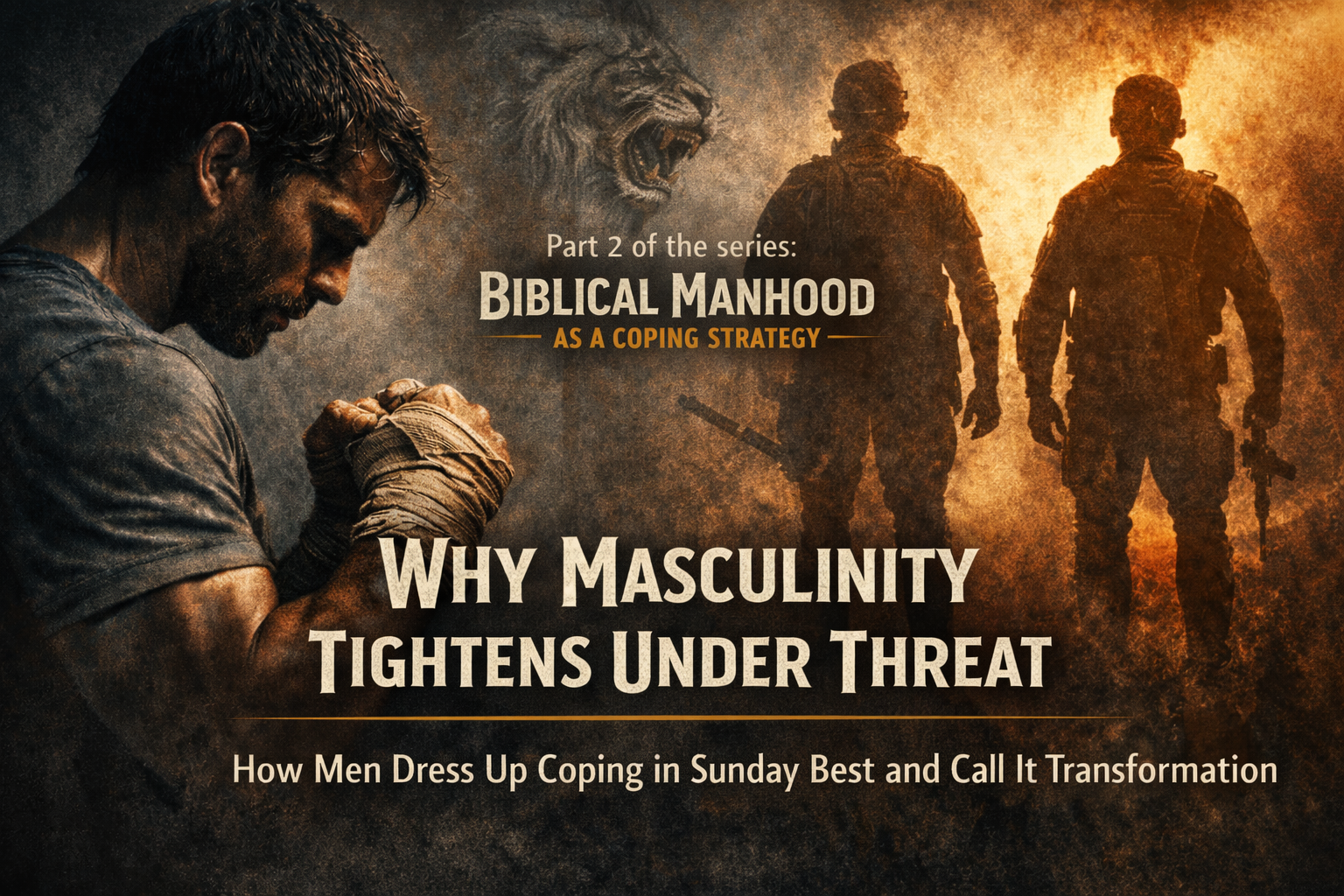

Part 2 in the series Biblical Manhood as Coping Strategy: How Men Dress Up Coping in Sunday Best and Call It Transformation
Start here: Biblical Manhood as Coping Strategy series overview
Threat does something predictable to masculinity.
It tightens it.
When the nervous system picks up danger, real or perceived, the definitions of “what a man is” shrink fast. The acceptable range narrows. The rules get stricter. The margins for deviation disappear.
This isn’t new. It isn’t cultural accident. It is biology meeting history.
How Threat Works in the Body
The nervous system doesn’t distinguish perfectly between physical threat and social threat. A lion in the grass or a culture that says “real men don’t cry” can trigger the same cascade.
Amygdala flags danger. Sympathetic branch mobilizes. Heart rate climbs. Muscles tense. Options reduce.
In that state, the body wants fast, clear, decisive action. Complexity feels dangerous. Vulnerability feels lethal. Exploration feels like luxury you can’t afford.
So the system constricts.
It favors scripts that have worked before. It grabs for control. It looks for hierarchy, roles, enemies, certainty.
Masculinity, as a cultural construct, becomes one of the most reliable scripts available.
When the World Feels Unsafe, Manhood Gets Rigid
Look at history.
After economic collapse, war, plague, social upheaval, ideas of manhood almost always tighten.
Men are called to protect, provide, lead, sacrifice. Emotional expression narrows. Physical strength, stoicism, decisiveness, sexual restraint get elevated. Deviation gets punished.
This isn’t coincidence.
Threatened systems need order. Men, socialized as the “strong” ones, get recruited as enforcers of that order, starting with themselves.
The body cooperates. Under sympathetic dominance, men feel the pull toward action, dominance, control. Vulnerability triggers shutdown or shame because it reads as threat.
So masculinity becomes the brace.
It gives a threatened nervous system something solid to grip.
Current Wave Is a Threat Response
The resurgence we are seeing right now is not primarily theological.
It is a collective nervous system reacting to perceived threat.
Economic precarity. Cultural shifts around gender. Political polarization. Information overload. Isolation after pandemic. Algorithmic outrage.
The air feels unsafe.
When the air feels unsafe, masculinity tightens.
Men get told, explicitly or implicitly, that the answer is to become more watchful, more disciplined, more decisive, more in control.
The teachings sell because they match the body’s threat response perfectly.
They offer hierarchy. Clear enemies. Moral certainty. Behavioral scripts.
They feel like strength because they reduce ambiguity.
They are coping, dressed in scripture.
Cost of Tightening
Every constriction has a price.
When masculinity tightens under threat:
Range shrinks. Vulnerability becomes suspect. Rest becomes weakness. Emotional nuance becomes effeminate. Curiosity becomes compromise.
Men learn to override more signals. Suppress more conflict. Perform more strength.
Capacity narrows.
The system stays mobilized, but it doesn’t expand.
It copes better. It does not heal.
Men end up leading, providing, protecting, often admired.
But inside the range is smaller. The body is tighter. The freedom to feel, rest, choose, connect without armor stays limited.
Why This Matters for Healing
Healing requires the opposite of constriction.
It requires safety.
When the nervous system finally registers consistent safety, it can venture out of sympathetic dominance. It can risk ventral vagal states: connection, curiosity, play, rest.
In those states, masculinity doesn’t need to be rigid to feel safe.
Strength can include receptivity. Leadership can include listening. Protection can include tenderness.
But as long as threat lingers, real or cultural, the tightening feels necessary.
Current teachings reinforce the threat perception: the world is dangerous, culture is collapsing, men must stand firm.
They keep the nervous system mobilized.
They keep masculinity tight.
Breaking the Cycle
The way out isn’t rejecting masculinity.
It is building enough internal and relational safety that the nervous system no longer needs the brace.
That safety lets the definitions widen again.
It lets men hold complexity without collapsing. Feel deeply without shame. Rest without guilt. Lead without overriding themselves.
That’s when manhood stops being a coping strategy and starts being something freer.
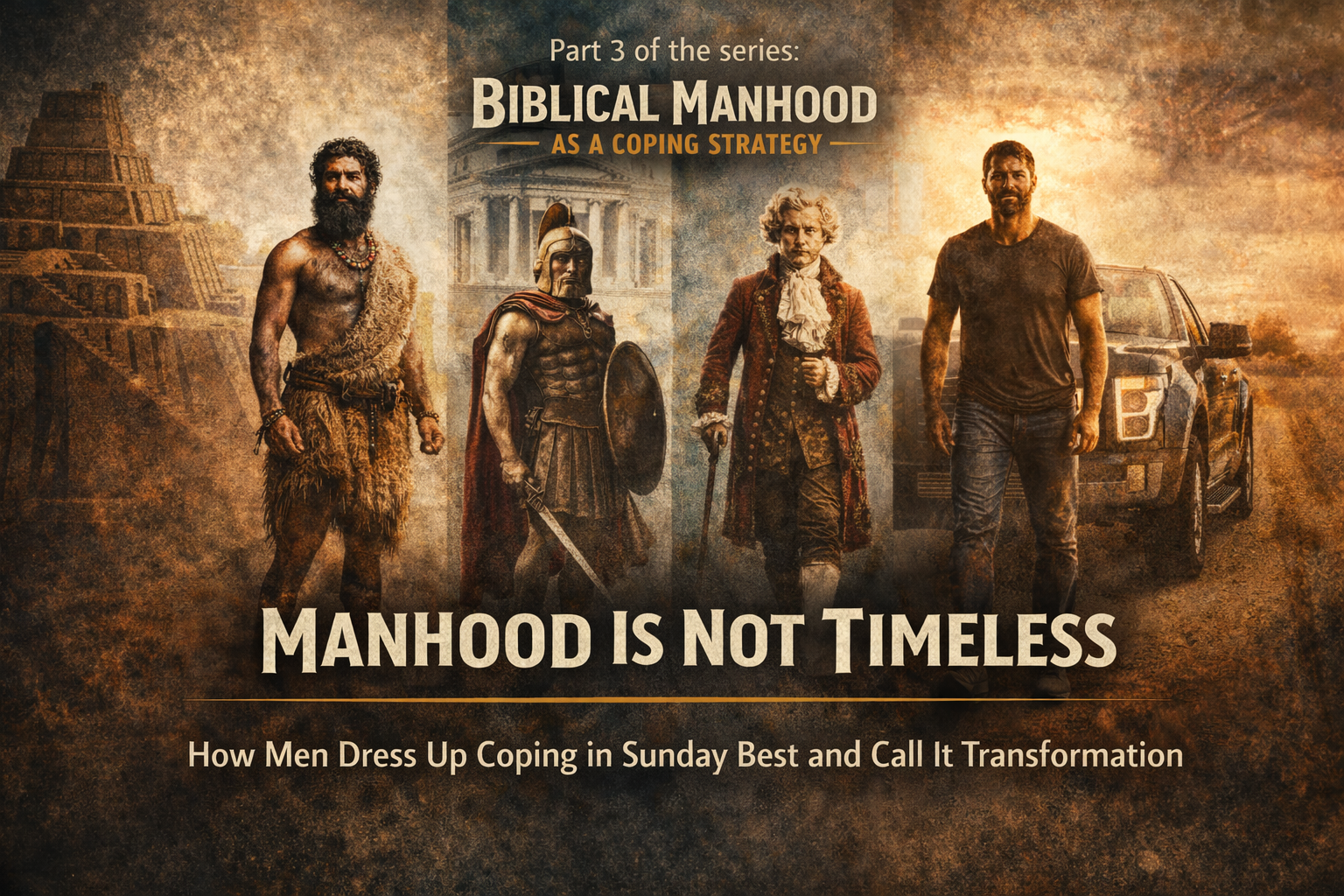
Next week we look at how “timeless” manhood actually isn’t.
If this is landing, stay with me.
Start here: Biblical Manhood as Coping Strategy series overview | Previous Article: Why Biblical Manhood Works (And Why That’s The Problem)

 8 Jan, 2026